Your South Baldwin patio is practically unusable from May through September. That relentless Gulf Coast sun pushes surface temperatures on unshaded concrete to 140°F or higher (Source: U.S. Environmental Protection Agency Heat Island Effect Report, 2022), turning your outdoor living space into a no-go zone right when you want to enjoy it most. Add our notorious humidity levels averaging 75% year-round and the corrosive salt air drifting in from the Gulf of Mexico, and you have a unique challenge that generic shade solutions simply cannot handle.
Whether you live in a charming coastal cottage in Gulf Shores, a Southern traditional home in Foley, or one of the sleek modern beach homes lining Orange Beach, your outdoor shade solution must do more than block sunlight. It must survive our environment while keeping your family comfortable and your energy bills manageable. This guide breaks down exactly which outdoor patio shades work best for South Baldwin’s demanding conditions—and which ones will fail you within two seasons.
Why South Baldwin Patios Need Specialized Shade Solutions
The Gulf Coast UV Challenge
South Baldwin receives an average UV index of 9-11 during summer months, classified as “very high” to “extreme” by the World Health Organization’s UV Index Scale (Source: National Weather Service Mobile/Pensacola Office, 2023). This intensity means standard fabric shades designed for moderate climates fade, weaken, and deteriorate at roughly twice the rate they would in northern states. Your investment in outdoor shades must account for this accelerated wear from day one.
Homeowners near Gulf State Park and throughout the Wharf Entertainment District area face an additional challenge: reflected UV radiation bouncing off water and white sand increases your total exposure by 15-25% compared to inland locations (Source: Skin Cancer Foundation Environmental UV Study, 2021). This double-exposure effect means your patio shade fabric needs minimum 95% UV blockage to provide meaningful protection for you and your outdoor furniture.
Humidity and Salt Air Corrosion Realities
Standard aluminum shade hardware corrodes visibly within 18 months in coastal Baldwin County environments. The combination of salt-laden air traveling inland from Orange Beach and our persistent humidity creates an electrochemical reaction that pits and weakens untreated metals. Marine-grade 316 stainless steel or powder-coated aluminum rated for coastal exposure are your only viable options for mounting brackets, tracks, and tension systems that will last.
Your shade fabric selection matters equally. Solution-dyed acrylic fabrics—where color penetrates the entire fiber rather than sitting on the surface—resist mold, mildew, and UV degradation far better than painted or coated alternatives. Look for fabrics specifically tested to meet AATCC 16 Option 3 standards for colorfastness, which requires 1,500+ hours of xenon arc exposure without significant fading.
Best Outdoor Shade Types for South Baldwin Homes
Motorized Retractable Awnings
For Gulf Shores and Orange Beach homeowners who want maximum flexibility, motorized retractable awnings deliver the best combination of sun protection and storm preparedness. When Baldwin EMC issues storm warnings—and you know how quickly Gulf weather changes—you can retract your awning in under 60 seconds, protecting your investment from wind damage that destroys fixed shade structures.
Premium retractable awnings using Sunbrella or Tempotest fabrics offer 98% UV blockage while allowing air circulation that prevents the trapped heat buildup you get with solid patio covers. Expect to invest $2,500-$6,000 for a quality motorized system with wind sensors, but this protects against the average $800 repair cost for storm-damaged fixed awnings (Source: Home Advisor National Cost Guide, 2023).
Exterior Solar Shades and Screens
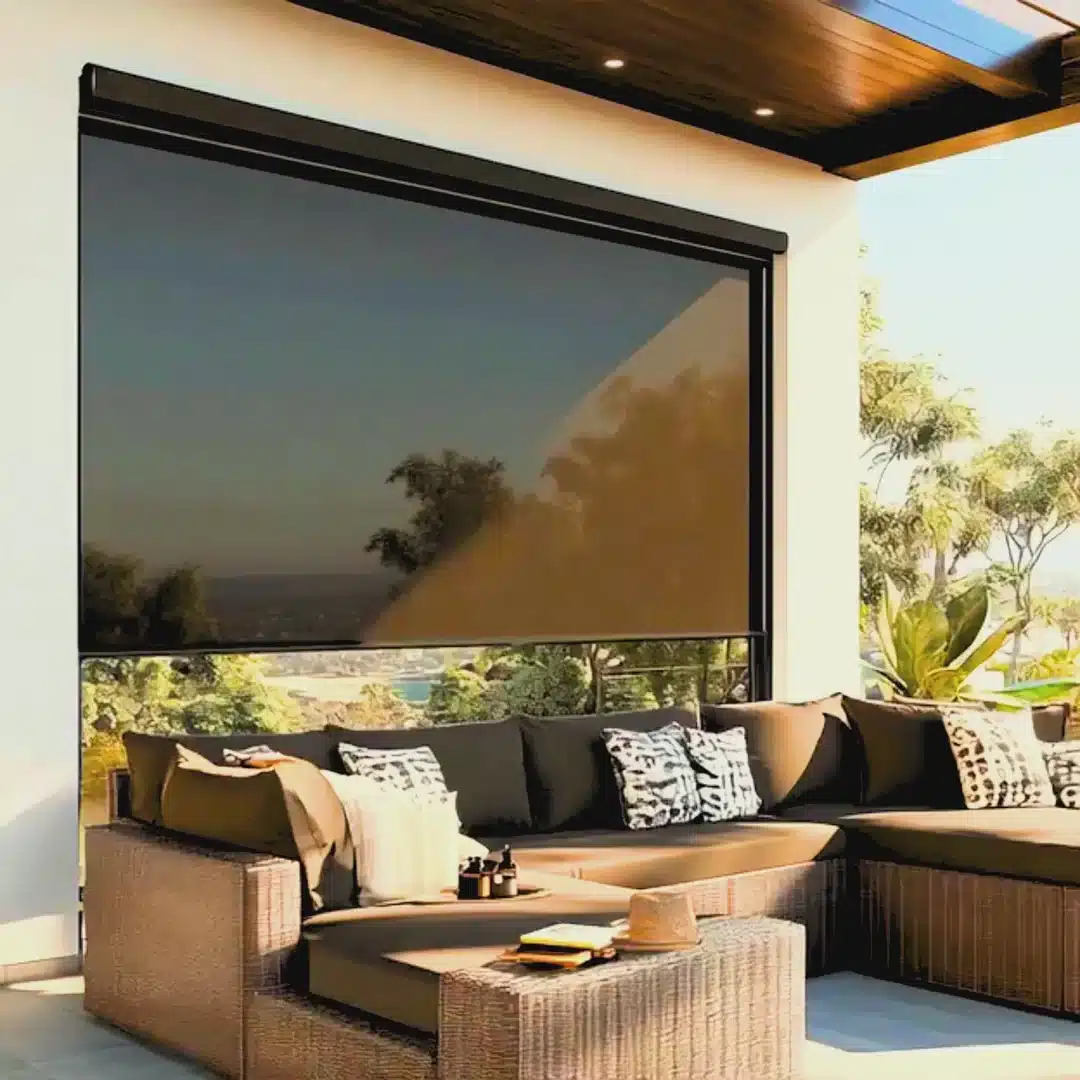
Solar shades mounted on the exterior of your covered patio or lanai stop heat before it enters your living space. This outside-mount approach reduces solar heat gain through windows by up to 80%, compared to just 45% for interior-mounted alternatives (Source: U.S. Department of Energy Window Treatments Fact Sheet, 2022). For Foley homeowners with west-facing patios taking the full afternoon sun, exterior solar shades can meaningfully reduce your Baldwin EMC summer cooling bills.
Choose openness factors between 3-5% for maximum heat and glare reduction while maintaining outward visibility. Higher openness percentages (10-14%) preserve more of your Gulf views but sacrifice UV protection. Many South Baldwin homeowners install 3% shades on west exposures and 10% on east-facing areas where morning sun is less intense.
Pergola Shade Systems
The architectural integration of pergola-mounted shade systems complements South Baldwin’s dominant home styles beautifully. Coastal cottages and Southern traditional homes pair naturally with louvered pergola systems that adjust throughout the day, while modern beach homes in Orange Beach often feature minimalist cable-guided shade sails that match their clean aesthetic.
“The best outdoor shade system is one you actually use. If your shades are manual and inconvenient, you will sit inside with the AC running. If they are motorized and programmed to your daily schedule, you will live on your patio.” — American Society of Heating, Refrigerating and Air-Conditioning Engineers (ASHRAE) Residential Comfort Guidelines
Material Selection Guide for Coastal Conditions
Fabric Comparison for Gulf Coast Environments
| Fabric Type | UV Blockage | Mold Resistance | Salt Air Durability | Typical Lifespan (South Baldwin) |
|---|---|---|---|---|
| Solution-Dyed Acrylic | 95-98% | Excellent | Excellent | 8-12 years |
| PVC-Coated Polyester | 90-95% | Good | Good | 5-8 years |
| HDPE Shade Cloth | 85-95% | Excellent | Excellent | 10-15 years |
| Standard Canvas | 80-90% | Poor | Poor | 2-4 years |
| Bamboo/Natural Reed | 70-80% | Very Poor | Very Poor | 1-2 seasons |
Notice that natural materials like bamboo and reed, while visually appealing, simply cannot survive South Baldwin’s humidity and salt exposure. Homeowners who install these materials typically replace them annually, making the “budget” option far more expensive over time than investing in proper coastal-rated fabrics from the start.
Hardware Requirements for Corrosion Resistance
Every metal component of your outdoor shade system must be specified for marine environments. This includes:
- Mounting brackets: 316 stainless steel or hot-dip galvanized steel with minimum 2.5 oz/sq ft zinc coating
- Roller tubes: Anodized aluminum (minimum Type II, Class 1) or fiberglass composite
- Fasteners: 316 stainless steel only—304 stainless will show rust spots within 12 months near Orange Beach and Gulf Shores
- Springs and tension mechanisms: Stainless steel with protective grease packing
- Motor housings: IP65-rated minimum for moisture intrusion protection
Requesting these specifications from your installer separates professionals who understand coastal work from general contractors who will leave you with a corroding system within two years.
Installation Considerations for South Baldwin Homes
Wind Load and Hurricane Preparedness
Baldwin County falls within ASCE 7-22 Wind Speed Zone with basic wind speeds of 150 mph for Risk Category II structures (Source: American Society of Civil Engineers Minimum Design Loads Standard, 2022). Your outdoor shade system either needs to be fully retractable before storms arrive or engineered to withstand these loads. There is no middle ground.
Fixed shade sails and permanent fabric structures require professional engineering calculations and typically need permits from Baldwin County Building Department. Retractable systems with wind sensors that auto-retract at 25-35 mph winds offer better practical protection for most Gulf Shores and Orange Beach installations.
Mounting on Different Home Styles
Your installation approach varies significantly based on South Baldwin’s prevalent architectural styles:
- Coastal cottages: Often feature wood siding and elevated foundations. Mount into structural members only—never into siding alone. Expect to add blocking behind siding for proper support.
- Southern traditional homes: Typically offer brick or stucco exteriors with substantial fascia boards. Lag bolt mounting into brick requires sleeve anchors rated for shear loads; fascia mounting needs backing to the rafter tails.
- Modern beach homes: Frequently use foam-insulated wall systems that require specialized mounting strategies. Through-bolting to interior backing plates may be necessary for heavy motorized systems.
Get a free consultation to assess your specific home’s mounting requirements—improper installation causes 60% of premature outdoor shade failures in coastal areas.
Cost and Energy Savings Analysis
Quality outdoor patio shades in South Baldwin range from $1,200 for manual solar screens covering a modest 8×10 patio area to $8,000+ for fully motorized retractable awning systems spanning 20+ feet. However, measuring cost without factoring energy savings misses the full picture.
Exterior shading reduces air conditioning loads by 25-30% for rooms with shaded windows and patios (Source: Lawrence Berkeley National Laboratory Windows and Envelope Research, 2021). For a typical 2,000 square foot South Baldwin home paying the Baldwin EMC average residential rate of $0.12/kWh, this translates to $180-$280 in annual cooling savings. Over the 8-12 year lifespan of quality shade fabrics, your total energy savings often exceeds half the installation cost.
Additional value comes from furniture and flooring protection. Direct Gulf Coast sun fades interior flooring visible through patio doors at dramatic rates—hardwood floor refinishing costs $3-$5 per square foot, and many South Baldwin homeowners refinish sun-damaged areas every 5-7 years without adequate exterior shading.
Why South Baldwin Homeowners Trust Local Expertise
Installing outdoor shades in South Baldwin requires understanding that solutions perfect for Atlanta or Birmingham will fail here. The combination of extreme UV, persistent humidity, salt air corrosion, and hurricane threats creates conditions that only specialists in Gulf Coast installations can properly address.
Local installation teams understand that your Gulf Shores cottage needs different mounting solutions than your neighbor’s modern Orange Beach construction. They know which fabric suppliers actually deliver marine-grade materials versus those who ship standard inventory with coastal claims. And they can respond quickly when that unexpected summer storm damages your shade system—something no out-of-state contractor can match.
- 15+ years serving Baldwin County residential and commercial clients
- Licensed and insured for Baldwin County permit requirements
- Exclusive use of 316 stainless steel hardware for all coastal installations
- 5-year installation warranty covering all labor and adjustments
- Same-week emergency service for storm damage repairs
Schedule your free outdoor shade consultation today and get a site-specific assessment of your patio, your home’s construction, and the exact products that will perform for the long term in your South Baldwin location. Whether you are enjoying evening breezes near the Wharf Entertainment District or need afternoon shade for your Foley backyard, we will design a solution that fits your home, your lifestyle, and your budget.
Frequently Asked Questions
How often should outdoor shade fabrics be replaced in South Baldwin’s coastal climate?
High-quality solution-dyed acrylic fabrics typically last 8-12 years in South Baldwin when properly maintained with annual cleaning using mild soap and water. PVC-coated polyester lasts 5-8 years, while budget canvas options rarely survive beyond 2-4 years due to mold growth and UV degradation. Inspect your fabric annually for signs of brittleness, fading beyond 20% of original color, or visible mold that does not wash away—these indicate replacement time regardless of age.
Can motorized outdoor shades withstand South Baldwin hurricane conditions?
Motorized retractable shades are designed to be fully retracted before severe weather arrives, not to withstand direct hurricane forces. Quality systems include wind sensors that automatically retract the shade when winds reach 25-35 mph, protecting the fabric and motor from damage. Fixed shade structures in Baldwin County require engineering to ASCE 7-22 standards for 150 mph wind loads and typically need building permits. Always retract motorized shades when Baldwin EMC issues storm warnings.
What is the difference between interior and exterior mounted solar shades for heat reduction?
Exterior-mounted solar shades intercept solar radiation before it passes through glass, blocking up to 80% of heat gain. Interior shades only block 40-45% because sunlight has already entered your home and converted to heat before the shade reflects it. For South Baldwin homeowners with west-facing patios and sliding glass doors, exterior mounting provides nearly double the cooling benefit and significantly greater Baldwin EMC bill reduction during summer months.
Do outdoor patio shades require permits in Baldwin County?
Retractable awnings and removable shade systems typically do not require permits in Baldwin County for residential installations. However, fixed pergola structures, permanent shade sails with structural posts, and any installation requiring footings or attachment to load-bearing elements may need permits from Baldwin County Building Department. Installations within designated flood zones near Gulf Shores and Orange Beach face additional review requirements. Your installer should verify permit requirements for your specific address before beginning work.

